Triangle, VA · Prince William County
Basement Water Removal in Triangle, VABasement Wall Drying & Basement Water Pump Out
Get basement water removal in Triangle for emergency basement flooding, basement water pump out and basement floor water damage.
Answered 24/7
Expert Basement Water Removal in Triangle, Dumfries, Quantico and Montclair
A wet basement gets worse every hour the water stays. In Triangle, water on a basement floor wicks up drywall, soaks carpet pad and seeps into the concrete, and cool below-grade air keeps it from drying on its own.
Homes in Triangle and nearby Dumfries, Quantico and Montclair with basements face storm seepage, sewer backups and plumbing leaks. Help with basement water removal covers pump-out, wall and floor drying and dehumidification.
Comprehensive Basement Water Removal Solutions
Basement Wall Drying
Concrete and block walls dry with directed airflow and dehumidification, which pull water out of the masonry.
Basement Water Pump Out
Pumping starts once power to the basement is safe. Deep water goes first, then extractors handle the thin layer left on the floor.
Basement Dehumidification
After drying, a household dehumidifier may still be needed to keep basement humidity in a healthy range.
Basement Moisture Inspection
Moisture meters and thermal cameras check walls, floors and the slab for water that is not visible, including behind finished walls.
Basement Floor Water Damage
Concrete floors are squeegeed, extracted and dried with airflow and dehumidifiers until moisture readings drop.
Indicators You Need Professional Water Removal
Gurgling Sounds From Drains
Gurgling floor drains or slow drains can be an early sign of a sewer line problem.
Rusted Appliances or Furniture
Rust on appliance bases, furniture legs or metal shelving points to standing water or long-term dampness.
Standing Water in Basement
Standing water anywhere on the basement floor needs to be pumped out before it soaks the walls.
Efflorescence on Concrete Walls
White, powdery deposits on concrete walls mean water is passing through the masonry.
How Basement Water Removal Works in Triangle
Step 1: Emergency Water Extraction
Power is made safe, then pumps and extractors remove standing water from the basement floor.
Step 2: Detailed Moisture Inspection
Meters map wet walls, framing and slab areas, including behind finished walls and under flooring.
Step 3: Drying and Dehumidification
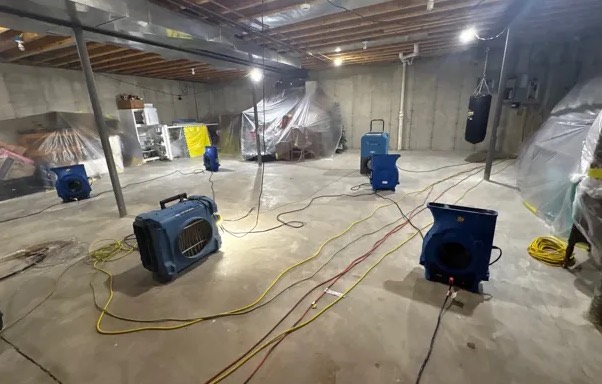
Air movers and large dehumidifiers run continuously, with readings checked every day.
Step 4: Final Verification and Monitoring
Readings are compared to dry areas, and equipment is removed only when the basement tests dry.
Sources of Basement Water Problems
Sewer Line Backups and Blockages
A blocked sewer line can push wastewater up through basement floor drains and toilets.
High Water Table and Hydrostatic Pressure
A high water table presses groundwater against the slab and walls, forcing it inside.
Clogged or Damaged Gutters
Clogged gutters and short downspouts dump roof water right next to the foundation.
Plumbing Leaks or Pipe Bursts
Supply lines, drain pipes and water heaters in the basement can leak or burst onto the floor.
Residential and Commercial Basement Water Removal in Triangle
Residential Basement Water Removal
Families should keep children and pets away from basement water until power is safe and the type of water is known.
Commercial Basement Water Removal
In restaurants and shops, basement water near food or stock storage needs removal and cleaning before those areas are used again.
When to Hire Local Pros for Basement Water Removal
You can move belongings up off the floor and run the dehumidifier you already own. Drying soaked walls and slab needs larger equipment and readings to confirm the job is done.
Investing in Professional Basement Water Removal
The pros look at water depth, water type and basement finishes before pricing basement water removal in Triangle, then explain the scope.
Water Depth and Volume
Deeper water takes more pumping time and usually means more materials got wet.
Basement Square Footage
Larger basements need more extraction, more drying equipment and more days of drying.
Drying Time Required
Basements dry slowly, and each extra day of equipment adds to the total.
Does Insurance Cover Basement Water Removal?
Photos, moisture readings and drying logs from local basement drying experts help support an insurance claim for basement water damage in Triangle.
The Value of Professional Basement Water Removal
Post-Service Moisture Verification
Final readings are recorded before equipment leaves, so you know the basement is dry.
Focus on Drying Outcomes
Drying continues until readings are normal, not just until surfaces look dry.
Advanced Drying Equipment
Pumps, extractors and large dehumidifiers remove water much faster than household tools.
Round-the-Clock Basement Water Removal for Triangle
The faster a basement is pumped out, the more can be saved. Call (703) 215-4551 for basement water removal in Triangle as soon as you see water.
Call Now (703) 215-4551Basement Water Removal Near Triangle: Areas Served
Need basement water removal outside Triangle? Service also covers Dumfries, Quantico and Montclair, including emergency help during storms.
- Basement Water Removal in Dumfries
- Basement Water Removal in Quantico
- Basement Water Removal in Montclair
- Basement Water Removal in Woodbridge
- Basement Water Removal in Dale City
- Basement Water Removal in Lake Ridge
- Basement Water Removal in Stafford
- Basement Water Removal in Lorton
- Emergency Damage Restoration in 22172
- Storm Damage Restoration in 22172
- Water Damage Restoration in 22172
- Water Extraction Service in 22172
- Water Leak Detection in 22172
- Water Removal Service in 22172
Basement Water Removal FAQs
How long does basement drying take?
Often several days or longer, because concrete and cool basement air hold moisture. Daily readings show when it is done.
Is a sump pump failure an emergency?
Yes, especially during rain. Groundwater can rise quickly once the pump stops, flooding the floor and finished rooms.
Can I dry my basement myself with fans?
Fans help with surface water, but walls and concrete need dehumidifiers and readings to dry fully.
What equipment is used for basement water extraction?
Submersible pumps, extractors, wet vacs, air movers, large dehumidifiers and moisture meters to confirm drying.
What happens during basement moisture control?
Dehumidifiers and air movers keep humidity low while materials dry, and readings confirm when the space is normal.